LimitlessLove Blog
Planning an Accessible Disability Wedding: Your Special Day
Your wedding should reflect who you are as a couple - barriers and all. This guide covers barrier-free venues, adaptive wedding wear, inclusive ceremony logistics, real couple stories, and budget strategies so your wheelchair wedding or disability wedding feels effortless and authentically yours.
A disability wedding is not a lesser celebration - it's a thoughtfully designed one. Whether you're planning a wheelchair wedding after meeting through wheelchair dating, or you and your partner have different access needs, the principles are the same: prioritize comfort, communicate openly with your venue, and design a day that works for every guest.
Couples who met on LimitlessLove and are now planning their weddings often tell us the same thing: the relationship skills they built - patience, honesty, and mutual respect - translate directly into wedding planning. You already know how to advocate for accessibility. Now you get to apply it to the happiest day of your life.
Here's where it gets interesting: accessible weddings aren't just easier for disabled guests - they're better for everyone. Grandparents, pregnant guests, and anyone who's ever struggled in heels all benefit from barrier-free design. Let's walk through each piece of the puzzle.
Venue Guide
Choosing a Barrier-Free Venue
The right venue eliminates 80% of accessibility stress. Tour at least three venues and bring this checklist.
Venue Accessibility Checklist:
- Step-free entrance from parking to ceremony and reception spaces
- Doorways at least 32 inches wide throughout the venue
- Accessible restroom on the same floor as the main event
- Wide aisles between tables - minimum 36 inches for wheelchair passage
- Elevator access if the venue has multiple levels
- Accessible parking within 200 feet of the entrance
- Stage or altar accessible by ramp, not stairs
- Seating that accommodates wheelchairs at reception tables
- Hearing loop or ASL interpreter availability for deaf guests
- Quiet room or sensory-friendly space for neurodivergent guests
When you tour a venue, bring a tape measure and a friend who uses a wheelchair or has a visible mobility aid. Their lived experience will catch things the venue coordinator might miss. Ask specific questions: "Is there a lip at the threshold?" "Can a wheelchair fit beside the head table?" "Is the accessible restroom actually accessible, or is it being used as a storage closet?"
For a little people wedding or any celebration involving guests of short stature, also consider counter heights at the bar, the height of buffet tables, and whether the dance floor is at the same level as the seating area. Small adjustments make a big difference.
What does this mean in practice? A venue that passes this checklist isn't just compliant - it's welcoming. That energy sets the tone for your entire celebration.
Attire
Adaptive Wedding Wear
Wedding attire should make you feel radiant and comfortable. Adaptive fashion has come a long way - here's what to look for.
For Wheelchair Users
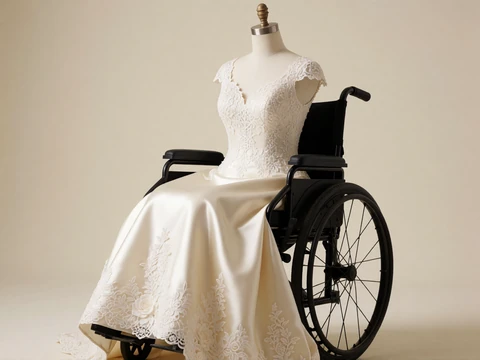
A wheelchair wedding dress or suit should account for seated posture. Look for A-line or sheath silhouettes that drape elegantly when seated, avoiding heavy ballgown skirts that bunch uncomfortably. Many adaptive fashion designers now offer wedding dresses with side or back closures, magnetic buttons, and fabrics that resist wrinkling from sitting.
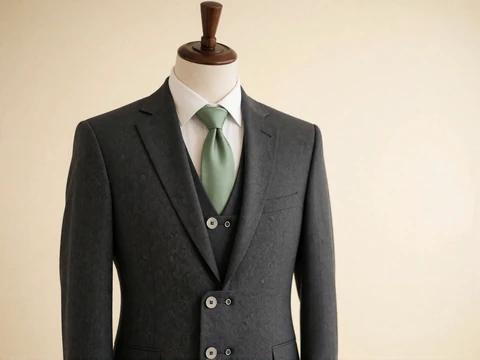
For suits, consider magnetic closures instead of buttons, stretch-fabric trousers that accommodate leg braces or prosthetics, and jacket cuts that sit well in a seated position. A good tailor can modify off-the-rack pieces - raise hemlines, add side zippers, or adjust sleeve lengths for prosthetic arms.
For Little People
Proportion matters more than size. Petite-specific tailoring ensures the dress or suit fits your frame rather than being shortened from a standard cut. Custom hemming, adjusted rise, and modified bodice proportions create a silhouette that feels made for you - because it was.
Ceremony
An Inclusive Ceremony
Small logistical choices make your ceremony meaningful and comfortable for everyone involved.
- Ramp the altar. If your ceremony space has a raised platform, ensure a ramp with a gentle grade (1:12 or better) so wheelchair users can approach the altar with dignity.
- Seat the wedding party at ground level. Instead of elevated chairs on the stage, place the bridal party at table height on the main floor - it's more intimate and eliminates accessibility barriers.
- Provide ASL interpreters. If any guests are deaf or hard of hearing, hire a certified ASL interpreter and position them in a well-lit area visible to those guests. For a deaf community wedding, this is essential, not optional.
- Offer a sensory-friendly space. Designate a quiet room with dim lighting and comfortable seating where neurodivergent guests - or anyone feeling overwhelmed - can take a break.
- Print large-text programs. Offer ceremony programs in 18-point font or larger for guests with low vision, and consider braille versions if needed.
- Plan the processional thoughtfully. A wheelchair processional is just as beautiful as a walking one. Coordinate with your officiant and photographer to ensure the moment is captured with respect.
But there's a catch: don't let logistics overshadow joy. The most inclusive ceremonies are the ones where accessibility feels seamless - guests notice the love, not the ramps.
Real Couples
Real Couples, Real Weddings
Couples who met on LimitlessLove and turned their connection into a lifetime commitment.
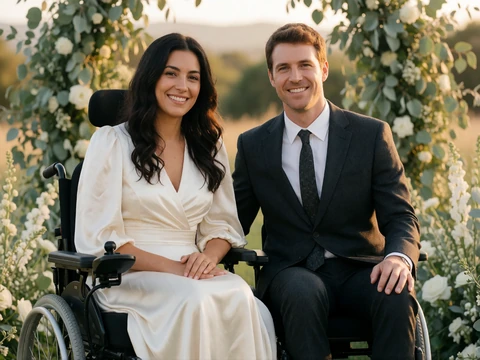
We planned every detail around access - from a ramped altar to a reception venue with wide aisles. Daniel never treated my wheelchair as something to work around. It was just part of our wedding, like the flowers or the music.
 Hope & Daniel
Verified
Met on LimitlessLove, engaged after 18 months
Hope & Daniel
Verified
Met on LimitlessLove, engaged after 18 months
Our venue had zero steps, the florals were at a height I could actually see over, and my dress was custom-tailored to my frame. Every guest told us it was the most comfortable wedding they’d ever attended.
 Mia & Tyler
Verified
Little people couple, married spring 2026
Mia & Tyler
Verified
Little people couple, married spring 2026
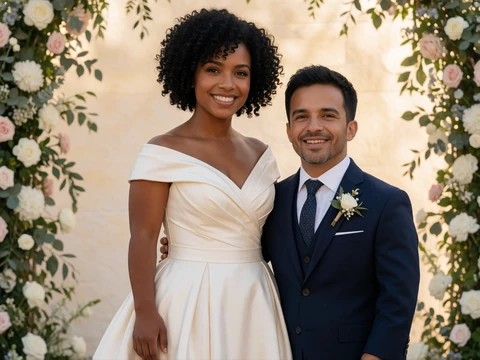
Read more about Hope and Daniel's journey - from their first message on LimitlessLove to their engagement - on our success stories page. Their story is a reminder that the foundation of a great wedding is a great relationship.
Budget
Budgeting for Accessibility
Accessible weddings don't have to break the bank. Here's how to allocate wisely with practical alternatives.
| Category | Standard Approach | Accessible Alternative |
|---|---|---|
| Venue | Historic estate with stairs and multiple levels | Single-level venue with step-free access - often comparable or lower cost |
| Attire | Off-the-rack dress or suit + alterations | Adaptive fashion brand or custom tailor - budget 15-20% more for modifications |
| Ceremony Access | Raised altar with steps | Portable ramp rental ($150-$300) or ground-level altar setup ($0) |
| Communication | Standard printed programs | Large-text programs ($50 extra) + ASL interpreter ($200-$500) |
| Reception Seating | Fixed round tables with assigned chairs | Movable chairs with wheelchair gaps - no extra cost, just planning |
| Sensory Needs | Not typically budgeted | Quiet room designation ($0) + dimmable lighting (venue may provide) |
| Photography | Standard package | Photographer experienced with disability weddings - discuss needs upfront |
The bottom line: many accessibility upgrades cost nothing - they're about planning, not spending. Choosing a single-level venue, designating a quiet room, and arranging movable seating are all zero-cost decisions that make a world of difference. The areas that do require investment - adaptive attire and ASL interpreters - are worth every penny for the comfort and dignity they provide.
Consider this: a couple who met through wheelchair dating already understands the value of thoughtful planning. Apply that same mindset to your wedding budget, and you'll create a day that's memorable for all the right reasons.
FAQ
Frequently Asked Questions
Common questions about planning an accessible wedding.
What is the cripple dating site?
The term "cripple" is considered offensive by most people with disabilities. Respectful alternatives include disabled dating sites, disability dating platforms, or accessible dating apps. LimitlessLove is a dedicated platform where people with disabilities - and those who love them - connect for real relationships. It offers 12 specialized communities, WCAG 2.1 AA accessibility, and human-moderated safety.
How do I find an accessible wedding venue?
Tour venues with a checklist: step-free entrances, 32-inch doorways, accessible restrooms on the same level, wide aisles, and elevator access if multi-level. Call ahead with specific questions, and if possible, bring someone who uses a mobility aid to the tour. Many modern venues are designed with universal accessibility in mind.
Where can I find adaptive wedding dresses?
Several adaptive fashion brands now offer wedding attire, and many traditional bridal shops will work with a tailor to modify dresses for seated wear. Look for A-line or sheath silhouettes, side or back closures, and fabrics that resist wrinkling. A skilled tailor can add magnetic closures, adjust hemlines, and modify bodices.
Can wheelchair users have a traditional wedding ceremony?
Absolutely. A wheelchair user can process down the aisle, exchange vows at a ramped or ground-level altar, and participate fully in every aspect of the ceremony. The key is choosing a venue with step-free access to the ceremony space and working with an officiant and photographer who understand disability-inclusive ceremonies.
How much more does an accessible wedding cost?
Many accessibility features - choosing a single-level venue, designating a quiet room, arranging movable seating - cost nothing. The main additional expenses are adaptive attire (15-20% more) and ASL interpreters ($200-$500). Overall, an accessible wedding can be comparable in cost to a standard one with thoughtful planning.